English
 Arabic

Shopping Cart (0)
Close
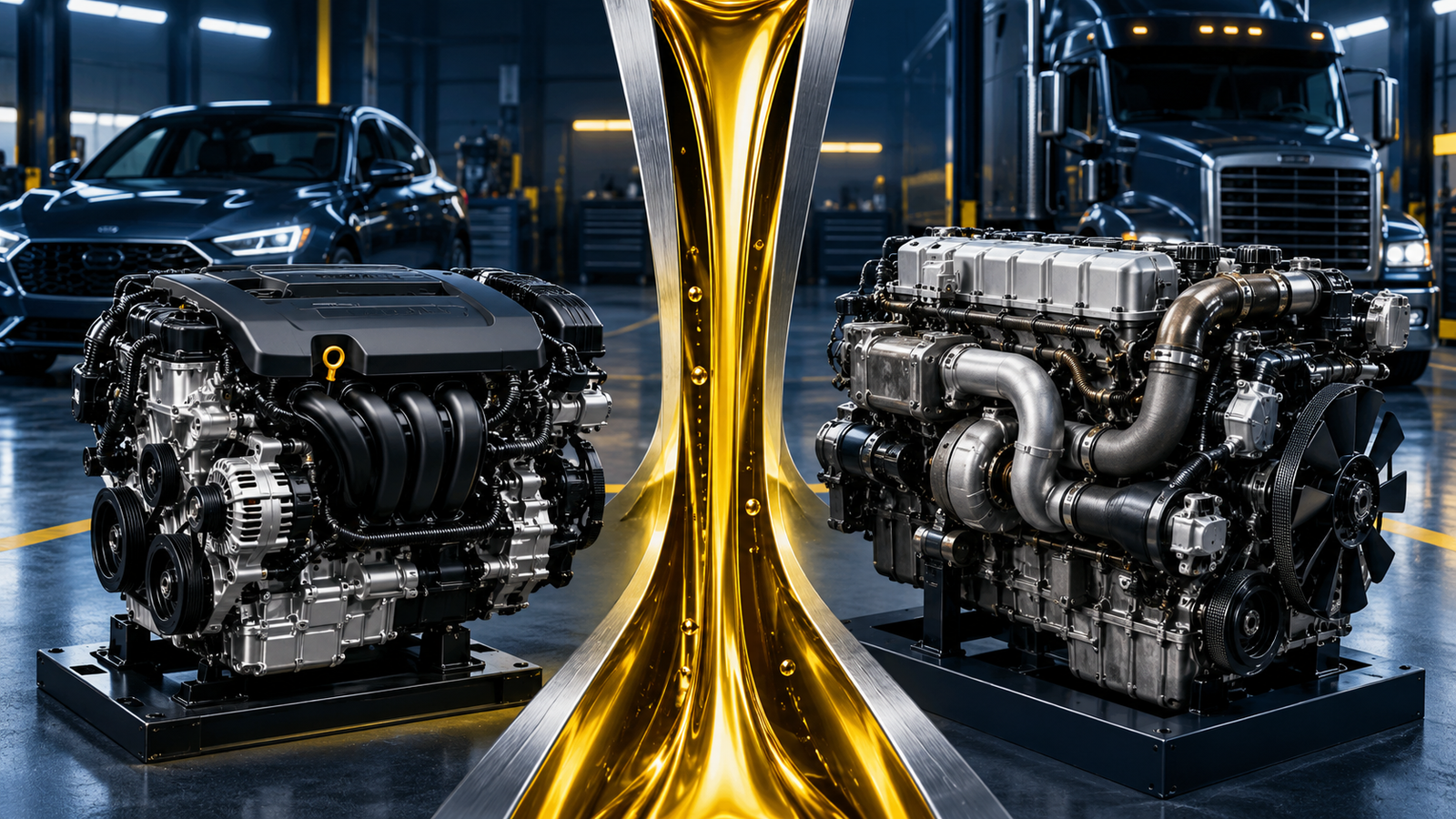
Engine oil is not a one-size-fits-all product. Gasoline and diesel engines operate under different temperatures, pressures, combustion conditions, and workloads. For this reason, each engine needs a lubricant formulated to protect its components and meet the specifications required by the vehicle manufacturer.
In this guide, we explain the main differences between gasoline engine oil and diesel engine oil, whether they can be used interchangeably, and how to choose the correct lubricant for your vehicle.
Gasoline engines are generally designed to run at higher speeds with lighter internal components. Diesel engines, on the other hand, use much higher compression ratios and frequently operate under heavier loads for longer periods. Diesel combustion also produces more soot and combustion by-products.
These operating differences affect the lubricant’s additive package, cleaning ability, resistance to oxidation, and capacity to protect the engine under pressure.
Gasoline engines usually operate at higher revolutions per minute and require an oil that flows efficiently, reduces friction, supports fuel economy, and protects components during frequent starts and stops. Modern gasoline vehicles may also include turbochargers, direct injection, and emission-control systems that require specific oil standards.
Diesel engines generate higher cylinder pressures and often work under demanding conditions such as heavy loads, long-distance driving, commercial use, towing, and high operating temperatures. Their oils are formulated to maintain a strong protective film and manage the additional soot created during combustion.
The base oil may be similar, but the additive package can be significantly different.
Numbers such as 5W-30, 10W-40, or 20W-50 describe how the oil flows at low and high temperatures. Two oils can have the same viscosity grade while meeting completely different performance specifications.
Always check both the recommended viscosity and the required performance standard in the owner’s manual. The correct specification is just as important as the viscosity printed on the container.
| Feature | Gasoline Engine Oil | Diesel Engine Oil |
|---|---|---|
| Typical operation | Higher engine speeds and lighter loads | Higher compression and heavier loads |
| Main formulation focus | Friction control, cleanliness, and fuel efficiency | Soot control, deposit resistance, and heavy-duty protection |
| Combustion by-products | Generally lower soot levels | Generally higher soot levels |
| Required standard | Specified gasoline-engine API/ACEA or manufacturer approval | Specified diesel-engine API/ACEA or manufacturer approval |
| Best choice | The exact oil required by the vehicle manufacturer | The exact oil required by the engine or fleet manufacturer |
Not automatically. Some lubricants carry approvals for both gasoline and diesel engines, but that does not mean every diesel oil is suitable for every gasoline vehicle. The wrong formulation may not match the engine’s emission system, catalyst requirements, viscosity needs, or manufacturer approval.
Use an oil across both engine types only when the label and technical data sheet clearly show that it meets the exact specification required by your engine.
Generally, a gasoline-only oil should not be used in a diesel engine unless it also carries the required diesel performance specification. It may not provide sufficient soot control, deposit protection, or performance under the engine’s higher loads and pressures.
Spike Lube provides dedicated Gasoline Engine Oils and Diesel Engine Oils developed for different engine designs and operating demands. Choosing the correct product helps maintain cleanliness, reduce wear, control deposits, and support reliable engine performance.
Before selecting any lubricant, compare the product’s viscosity and approvals with the requirements listed in your vehicle manual. If you are uncertain, contact a qualified technician or the Spike Lube team with your vehicle model, engine type, manufacturing year, and operating conditions.
No. A thicker oil is not automatically better. The correct viscosity depends on the engine design, temperature range, operating condition, and manufacturer recommendation.
No. Oil color is not a reliable way to determine its application or remaining service life. Always use the label, technical data sheet, and required performance specifications.
Only when the oil carries all the specifications required by both engines. Never assume compatibility based on viscosity alone.
Gasoline and diesel engine oils are designed around different operating demands. The safest choice is not the most expensive oil or the thickest oil—it is the lubricant with the correct viscosity and performance specification for your engine. Following the vehicle manufacturer’s recommendation is the best way to protect performance, efficiency, and engine life.